
FROM THE JEWISH NOTE TO WANDERING CROSS-CULTURAL SHUL
This story began in 2009, when a Belarusian film director, a Latvian cinematographer, and the head of a regional TV channel in the Belarusian town of Barysaŭ came together to produce a 12-part series involving both professionals and amateurs. When the project came to an end, the crew realised they did not want to part ways. Out of this shared enthusiasm grew a community of people determined to create an alternative cultural life in a provincial town.
FROM THE JEWISH NOTE1 TO WANDERING CROSS-CULTURAL SHUL2 or from the question «Why are there Belarusian dances in Belarus, but not Jewish ones?» to the creation of a cinema and research space.
1 — This is not a reference to Mikhail Weller’s book, it’s the title of our first dance party with a Yiddish-Belarusian repertoire!
2 — Shul — «school» from Yiddish — שול, in German – Schule.
This story began in 2009, when a Belarusian film director, a Latvian cinematographer, and the head of a regional TV channel in the Belarusian town of Barysaŭ came together to produce a 12-part series involving both professionals and amateurs.
When the project came to an end, the crew realised they did not want to part ways. Out of this shared enthusiasm grew a community of people determined to create an alternative cultural life in a provincial town.
For several years, the creative team studied ballroom traditions across eras, their hometown’s history, culture of ages, organizing costumed events, guide tours, quests for kids and adults, performances, and workshops to enrich the city’s cultural landscape with alternative activities. They gathered passionate people, co-developing new ideas. The team had no funding, and for a long time, they didn’t even have any permanent venue for meetings. Because, it was more of a circle of friends whose mission and interest was to support each other in their creative pursuits than group of professionals with precise intentions.
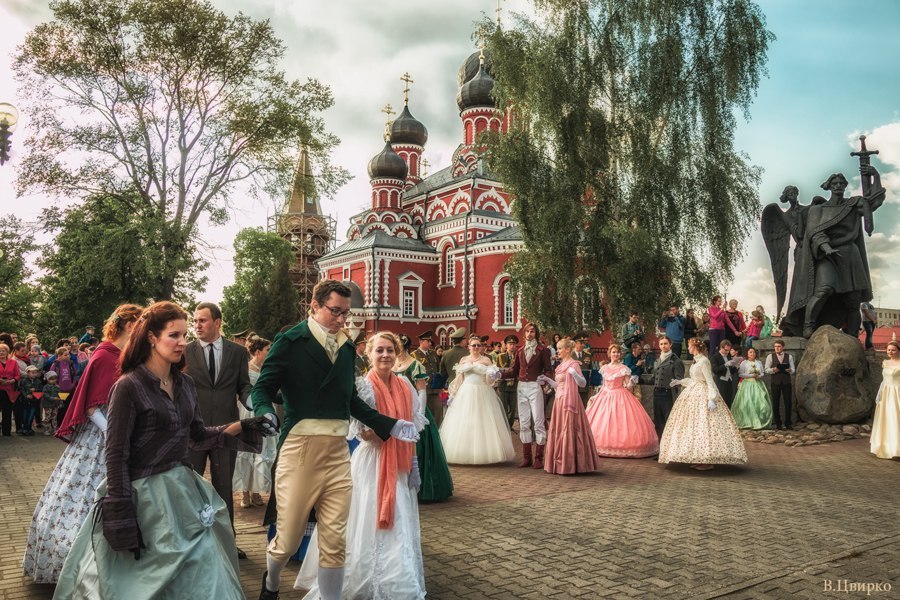
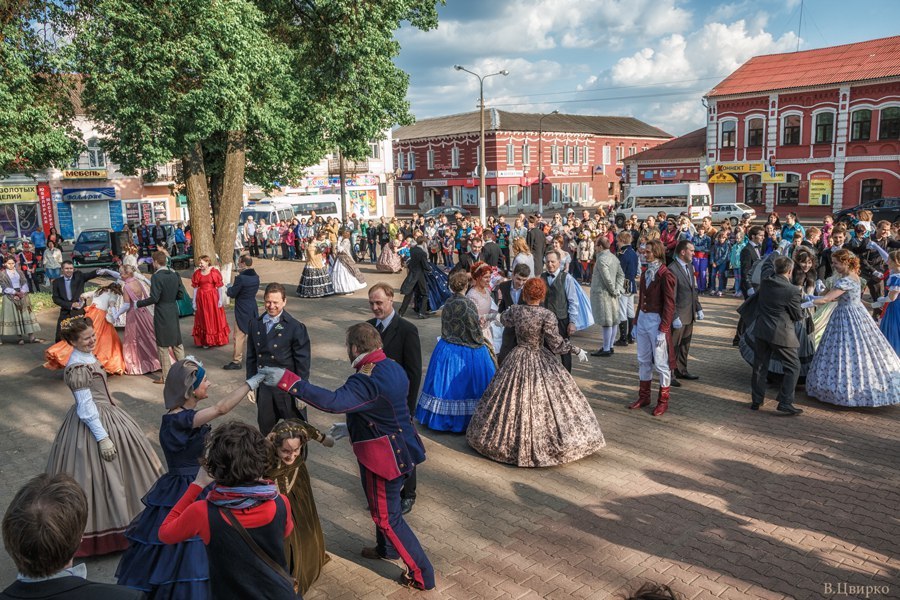
Photo credit: V. Tsvirko
AND THEN…
It took just one year (from summer 2016 to summer 2017) for the independent initiative Барысаўская Мыза (The manor of Barysaŭ), which had already been involved with historical dance parties and exploring local urban history for some time, to shift its focus to researching strictly Jewish dance and music heritage!
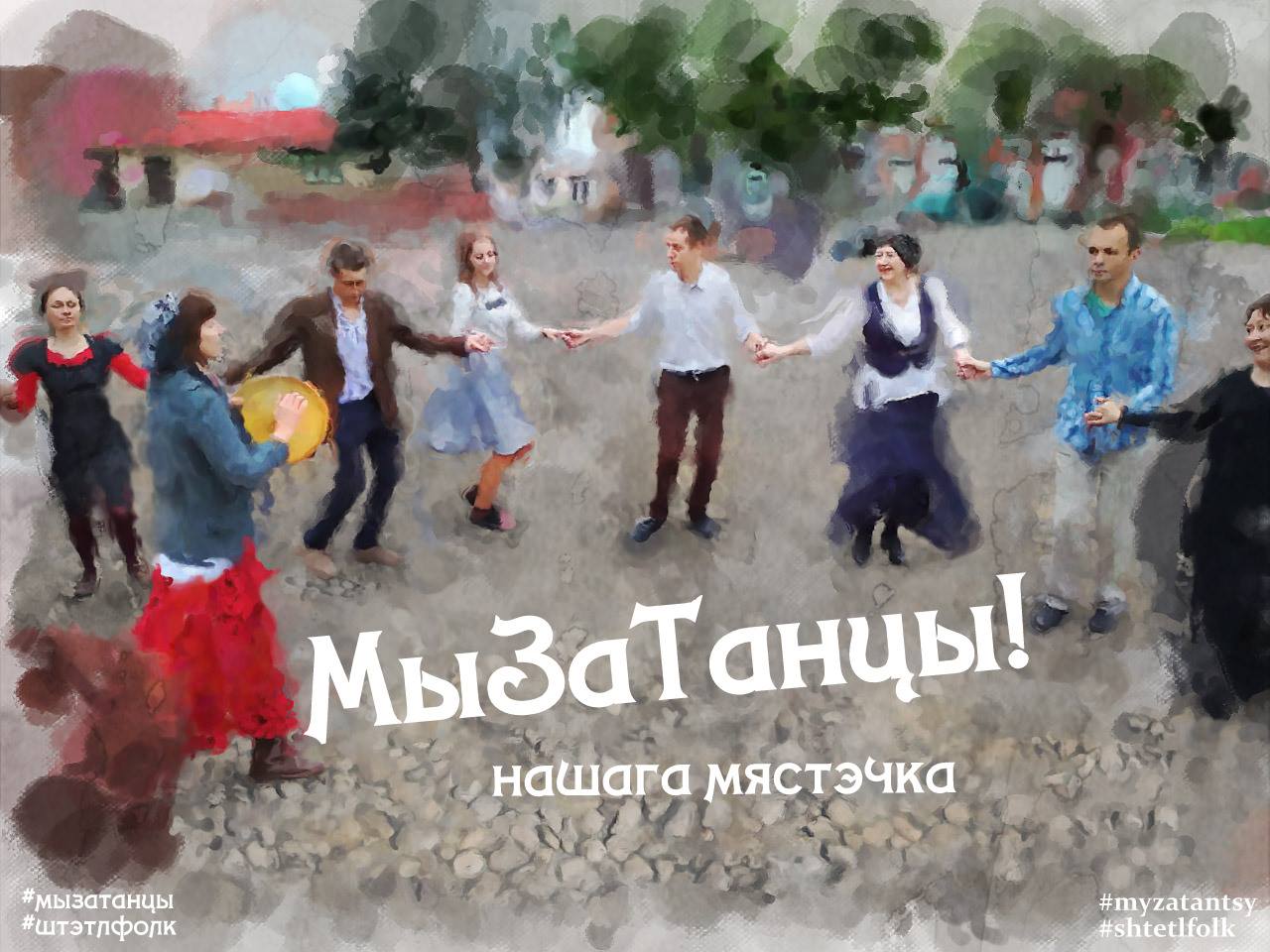
Photo credit and art: K. Zalialetdzinava
Yes, since 2016, our community has been exploring the Jewish cultural heritage of Belarus through dance, film, music, and research. What began as local dance gatherings gradually evolved into international collaborations, artistic projects, and cultural activism.
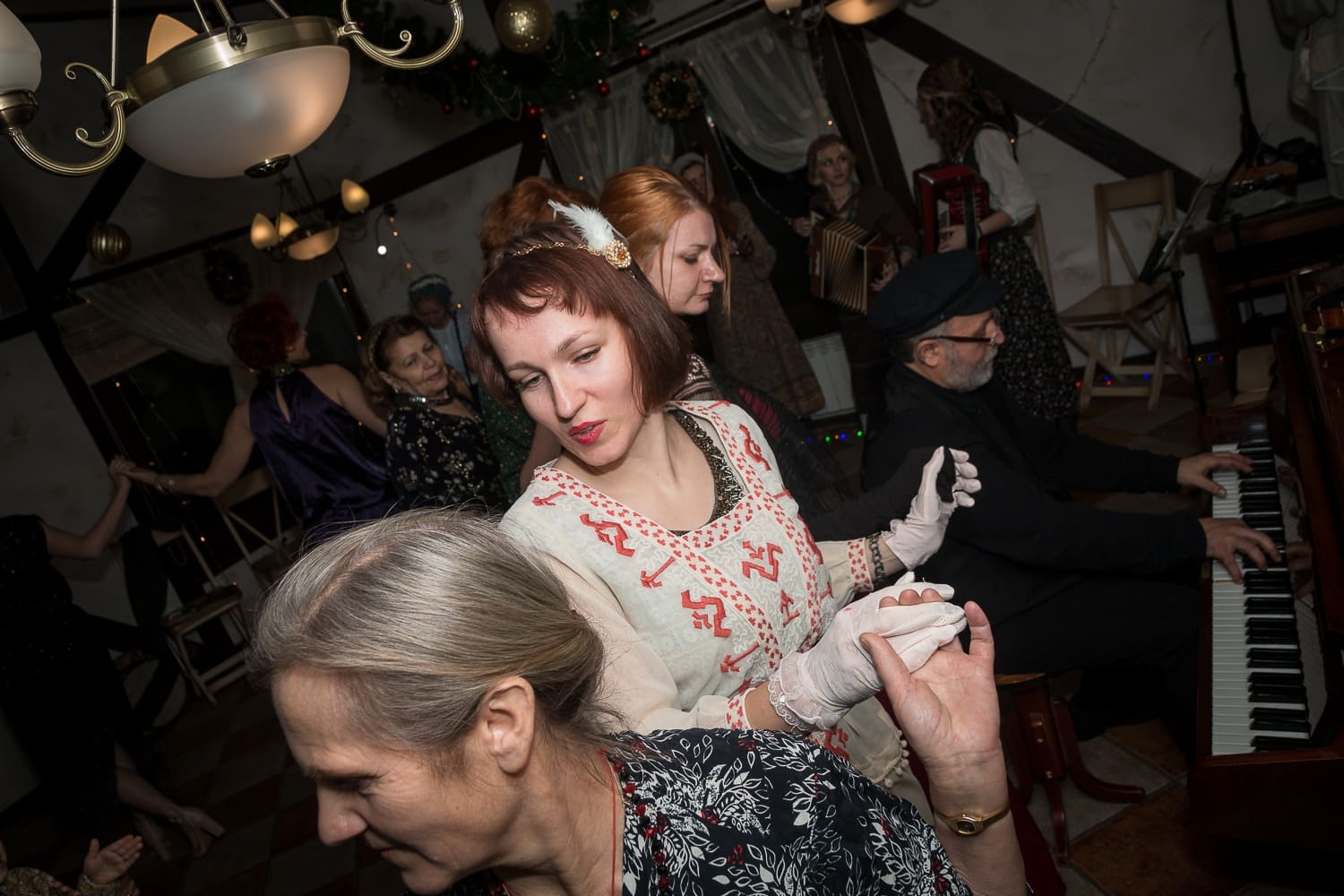
With Alexey Rozov, the klezmer from Moscow
Photo credit: V. Tsvirko
HOW DID THIS HAPPEN?
So, it is a BRIEF TIMELINE of Our Community’s “Jewish Turn” :
2016
Musicians from the folk dance project Свае Танцы (Our Dances) discovered our community Барысаўская Мыза online through the MыЗаТанцы! (We Are for Dance!) initiative thanks to our photos, videos, and reflections on dance culture. Together, we began organising regular dance parties in Barysaŭ, exploring dances such as Subota and Sher (obvious Jewish traces!) accompanied by fiddle, clarinet, tambourine, and accordion.
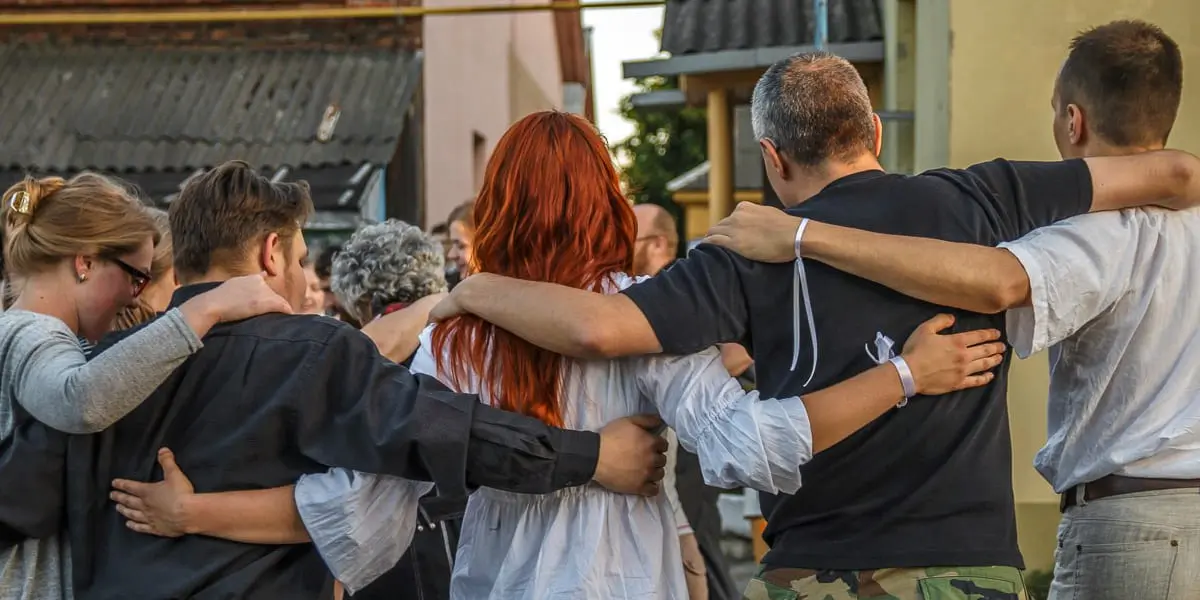
The first Belarusian-Yiddish dance party in Barysaŭ
Photo credit: V. Tsvirko
2017
The dance party На Жыдоўскай ноце (On the Jewish Note), together with the На таку3 kapelye, brought Jewish dances back to the former Jewish ghetto of Barysaŭ for the first time in many years.
3 — Na Taku — literally “at the threshing floor,” a Belarusian expression associated with communal work and a good harvest. Traditionally, the threshing floor (takoŭka or tok, tačok) was also a place where villagers gathered for open-air dance parties.
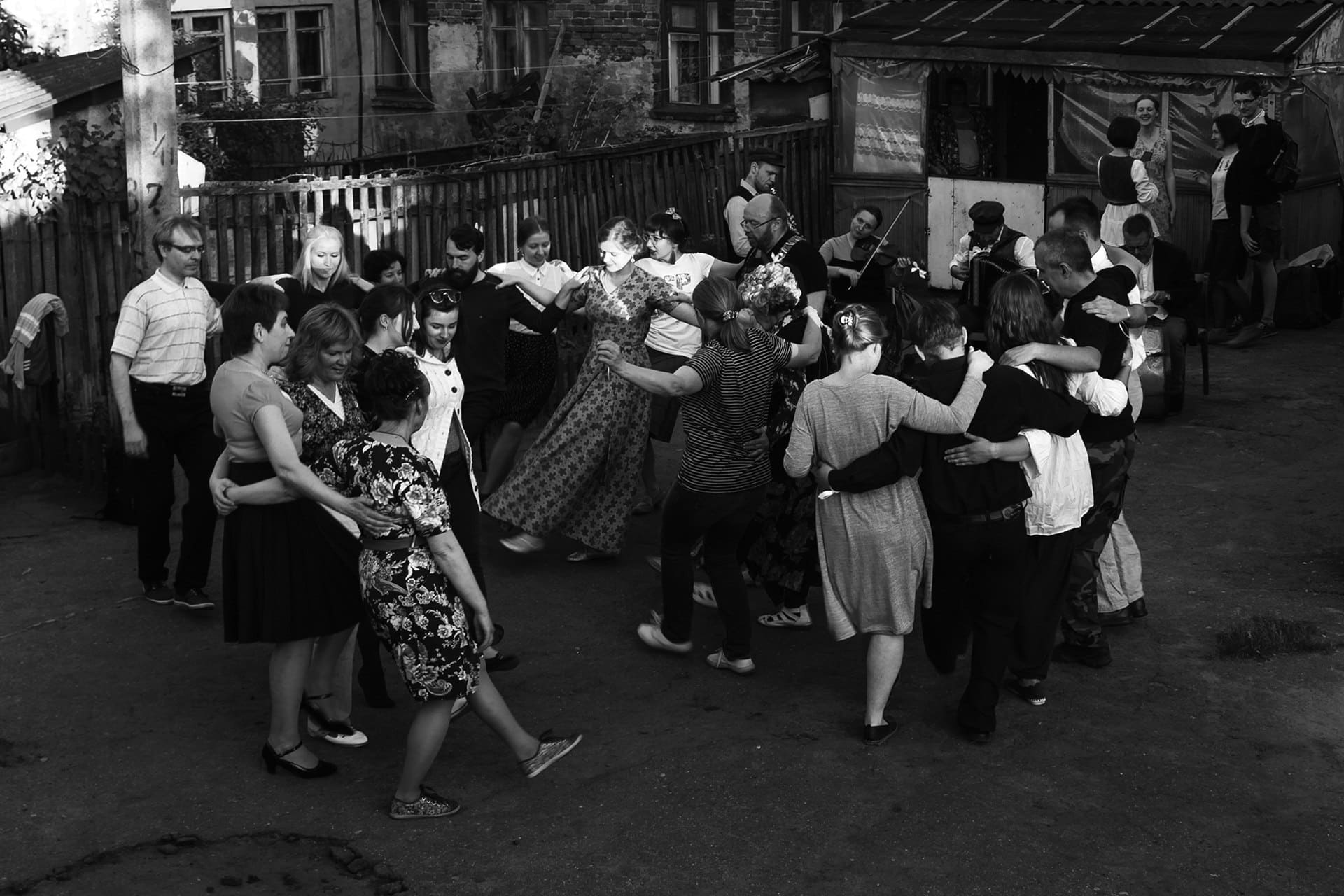
The first Belarusian-Yiddish dance party in Barysaŭ
Photo credit: M. Cherkashin
2017
Filming of the silent black-and-white feature film of Magic Scissors (2017-2024, 65 min.), inspired by Jewish fairy tales. As an important musical part of the project, the Žydovačka kapelye was formed, as an amateur band, to create and play a live soundtrack for the movie. Non-klezmer kapelye! Because of using folk music, but violating this actually «men» tradition. In the post-folklore Belarusian environment, it was the first and very brave female music band, which performed vernacular (not for a stage, but for the community) music.
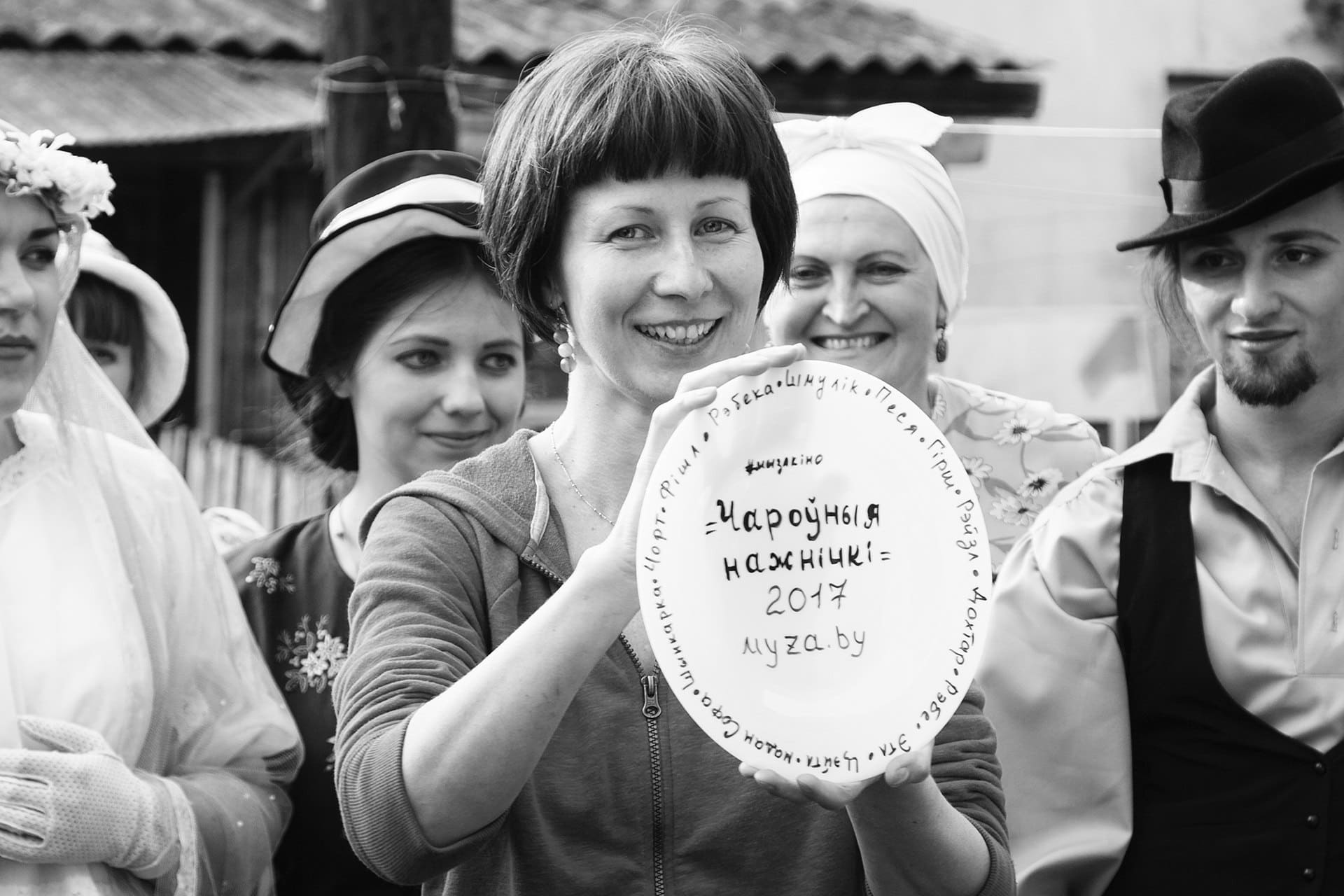
Photo credit: M. Cherkashin
Awards: Best Feature Film — Bulbamovie Festival in Warsaw, 2024
2018–2020
Live-scored screenings of Magic Scissors, like this event in Maladečna, 2018, accompanied by workshops on Yiddish dance and Belarusian dances influenced by Jewish tradition.
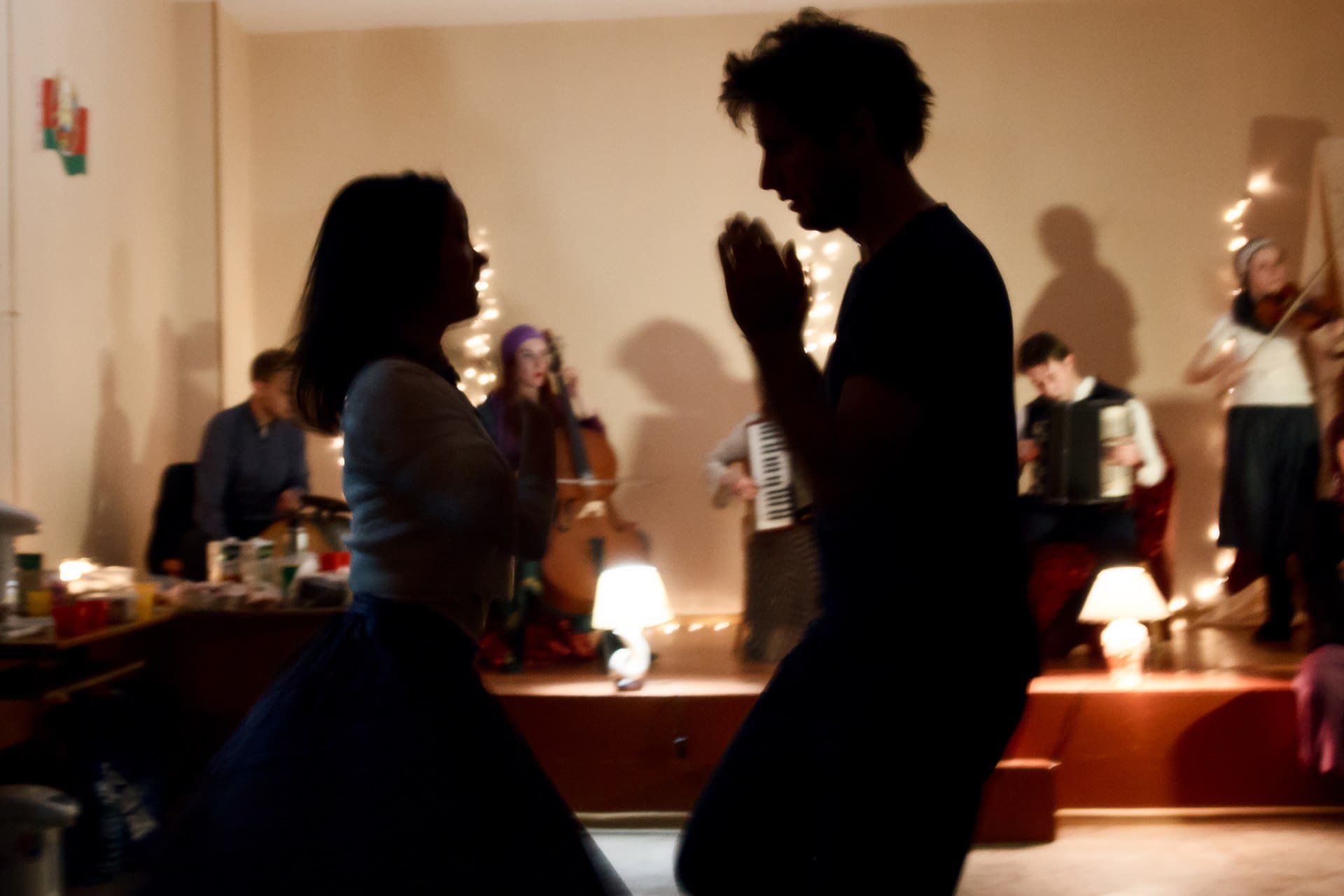
Photo credit: M. Cherkashin
2019
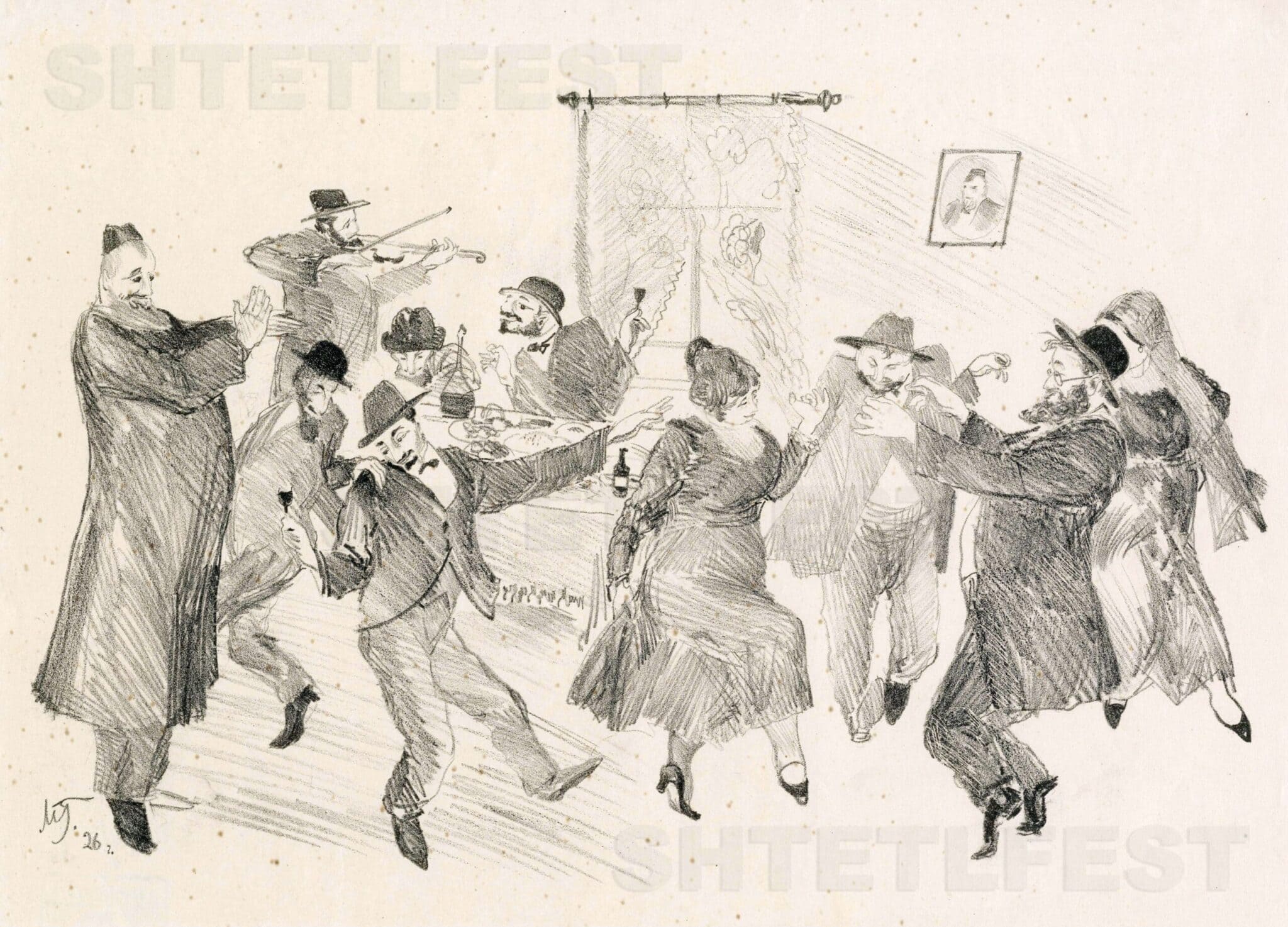
Launch of the Shtetlfest project with support from a grant programme. Despite covid-19 and the political crisis in Belarus, the project continued through research expeditions with Polish partners and the publication of collected materials. One of the most valuable discoveries was a series of sketches by Mendel Gorshman depicting Yiddish dancing in Belarusian shtetls (1926–1928).
2019
Group mobility grant from the MOST programme (Goethe-Institut) for participation in Yiddish Summer Weimar. Belarusian musicians and dancers took part in the festival for the first time.
Even though the participants had been exploring Jewish dance and music for a couple of years on their own, their immersion in Yiddish culture at the festival was captivating and overwhelming.
It was a moment of revelation and realization of the impossibility of mastering a cultural tradition without a community and its bearers.
Thus, the participants realized the need to intentionally create conditions for the study and revival of Yiddish culture in Belarus? the place where klezmers have disappeared, where Jews hardly speak Yiddish or dance.
This trip was the key that unlocked new project ideas.
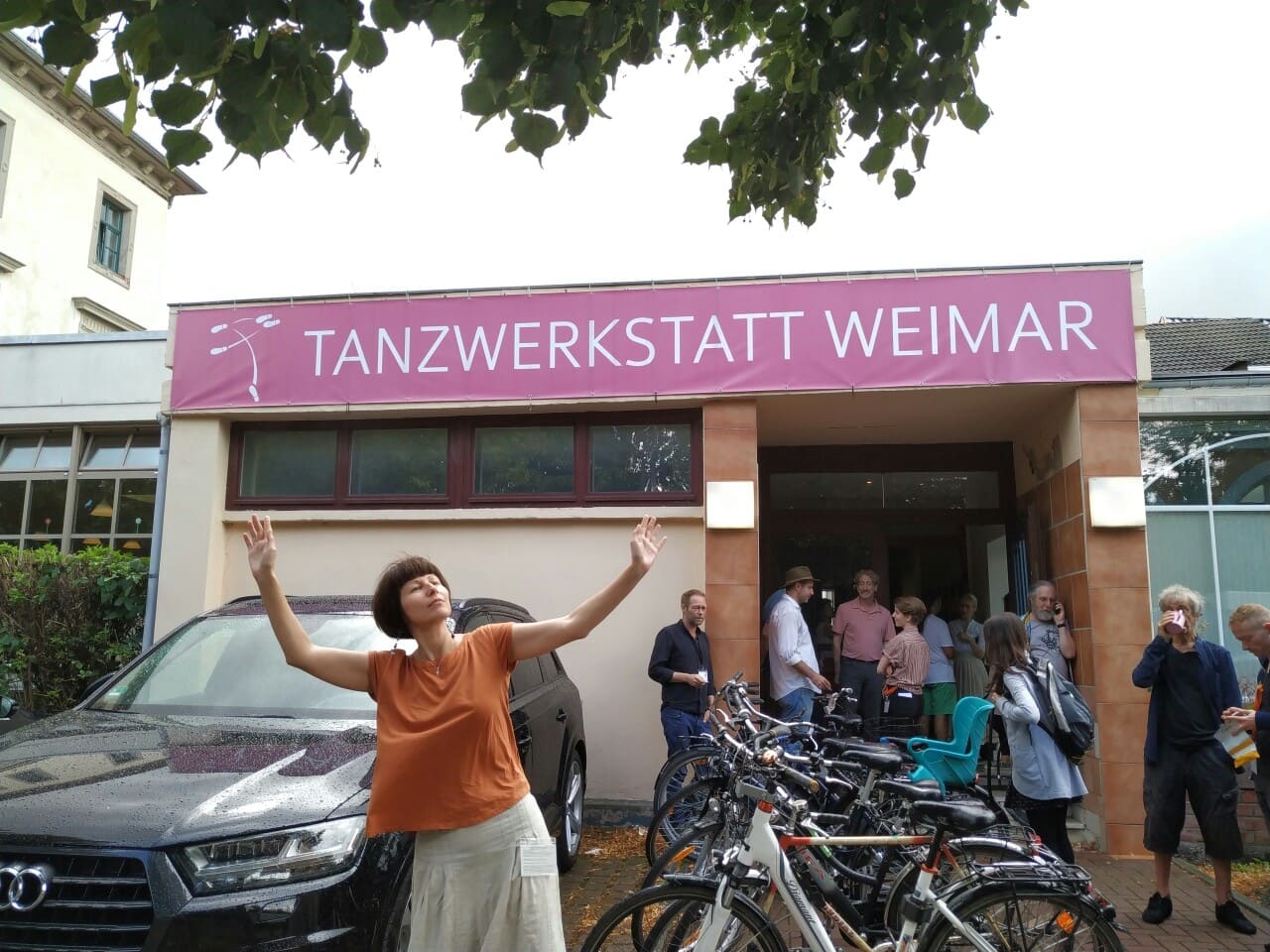
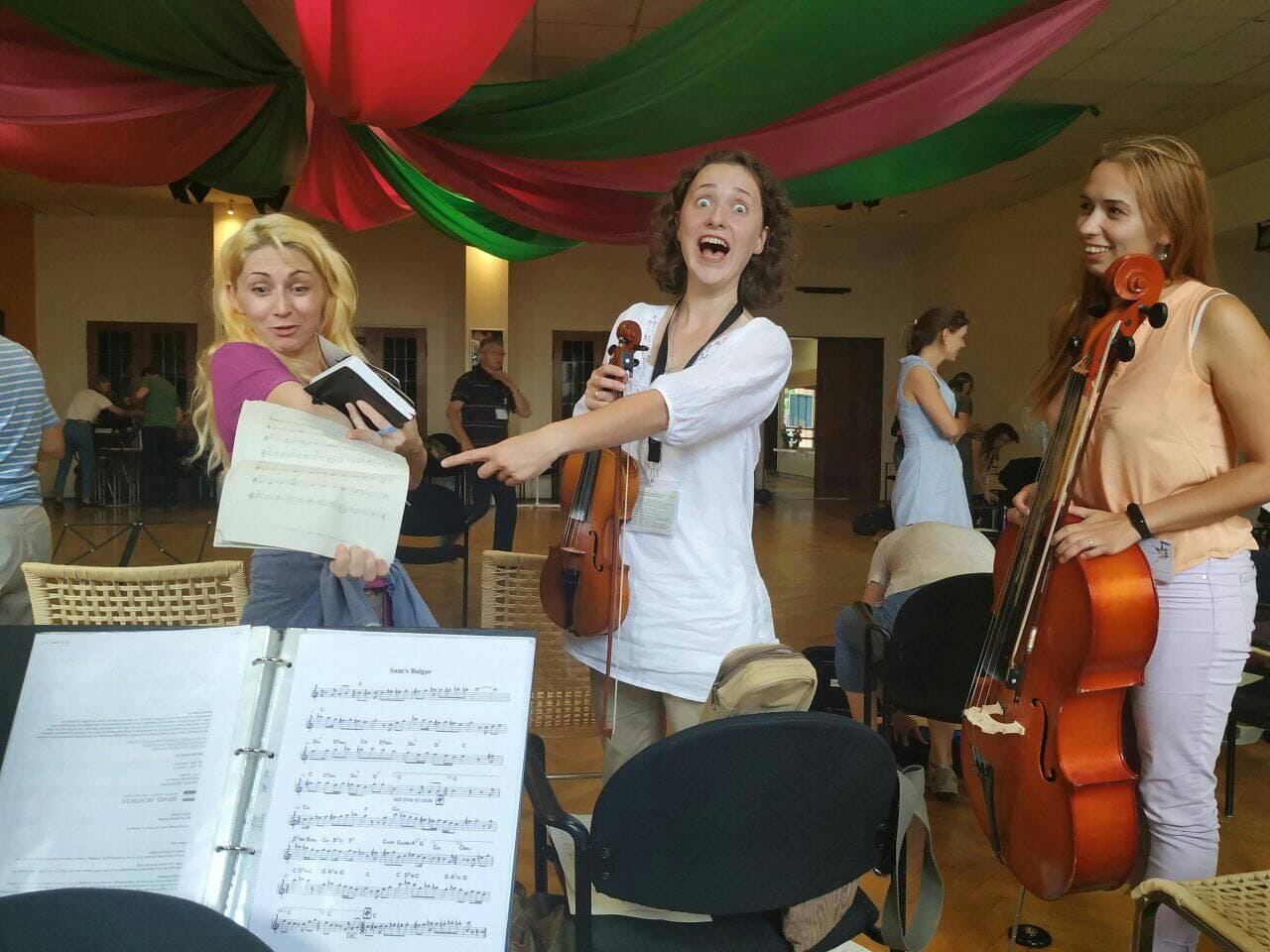
Photo credit: our archieve
2020
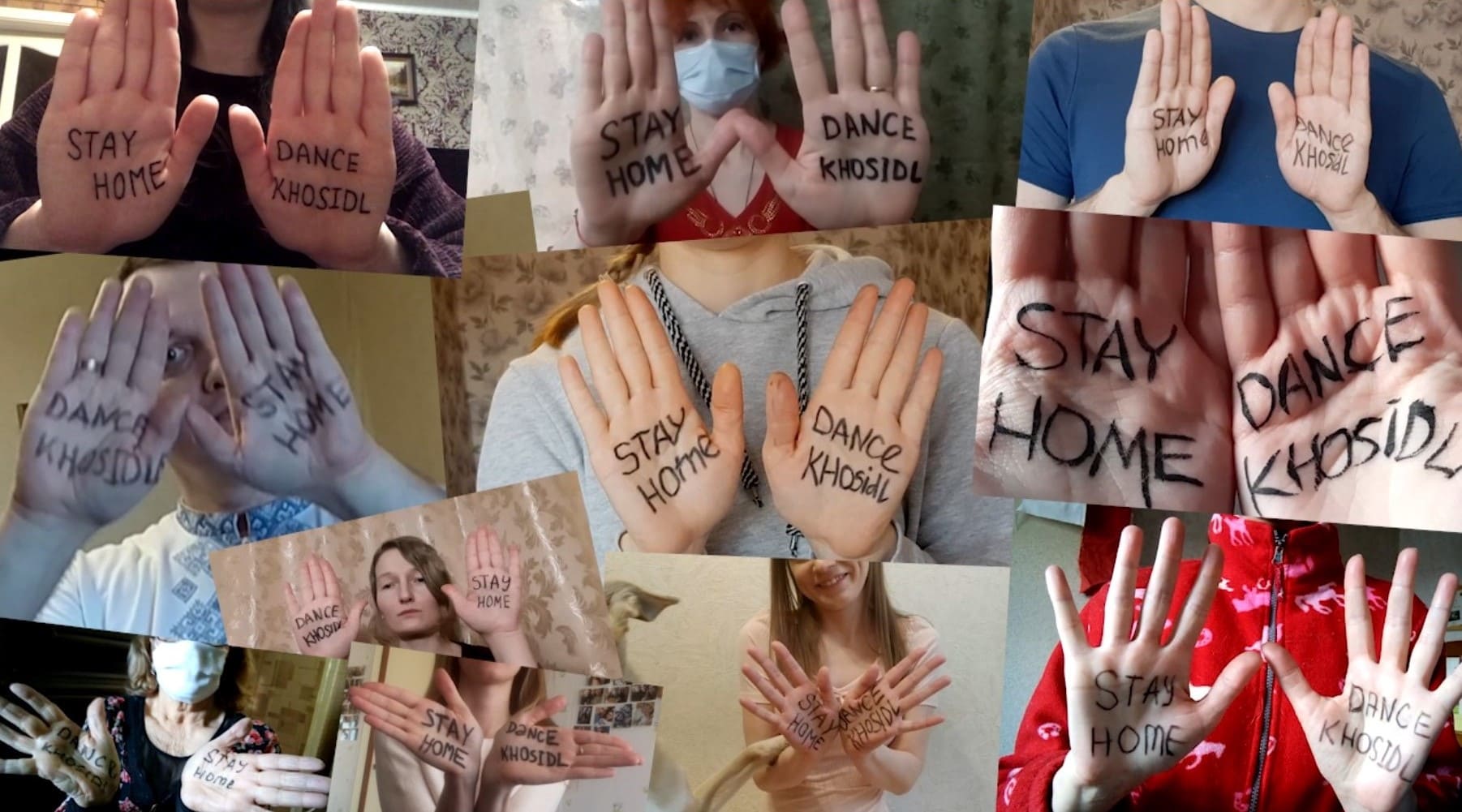
Creation of the video project Stay Home Dance Khosidl — a documentation of Yiddish dance by musicians and dancers during the period of forced social covid-19 isolation.
2021
Online workshop for the Belarusian-Jewish Cultural Heritage Center festival. As an example of the study of cross-cultural connections in the dance repertoire of two traditions.
2021
Art residency in the village of Kaptaruny focused on Yiddish dance and music practice. The interaction between a professional and an amateur musician, the interaction between a musician and a dancer, and her perception of the Yiddish melody through the body.

2022
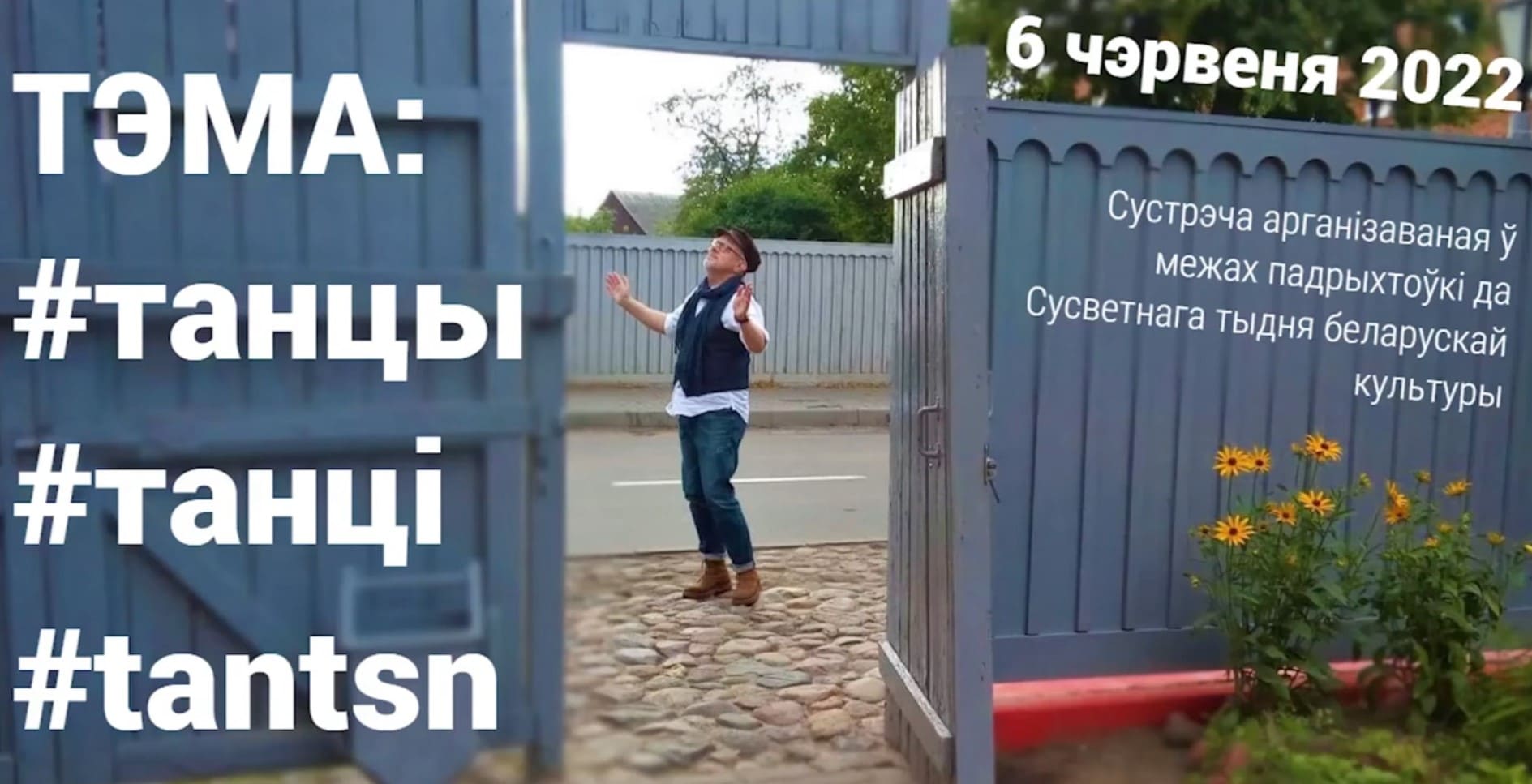
Launch of the #tantsn project exploring connections between Jewish, Ukrainian, and Belarusian dance traditions through discussions and video recordings.
2022
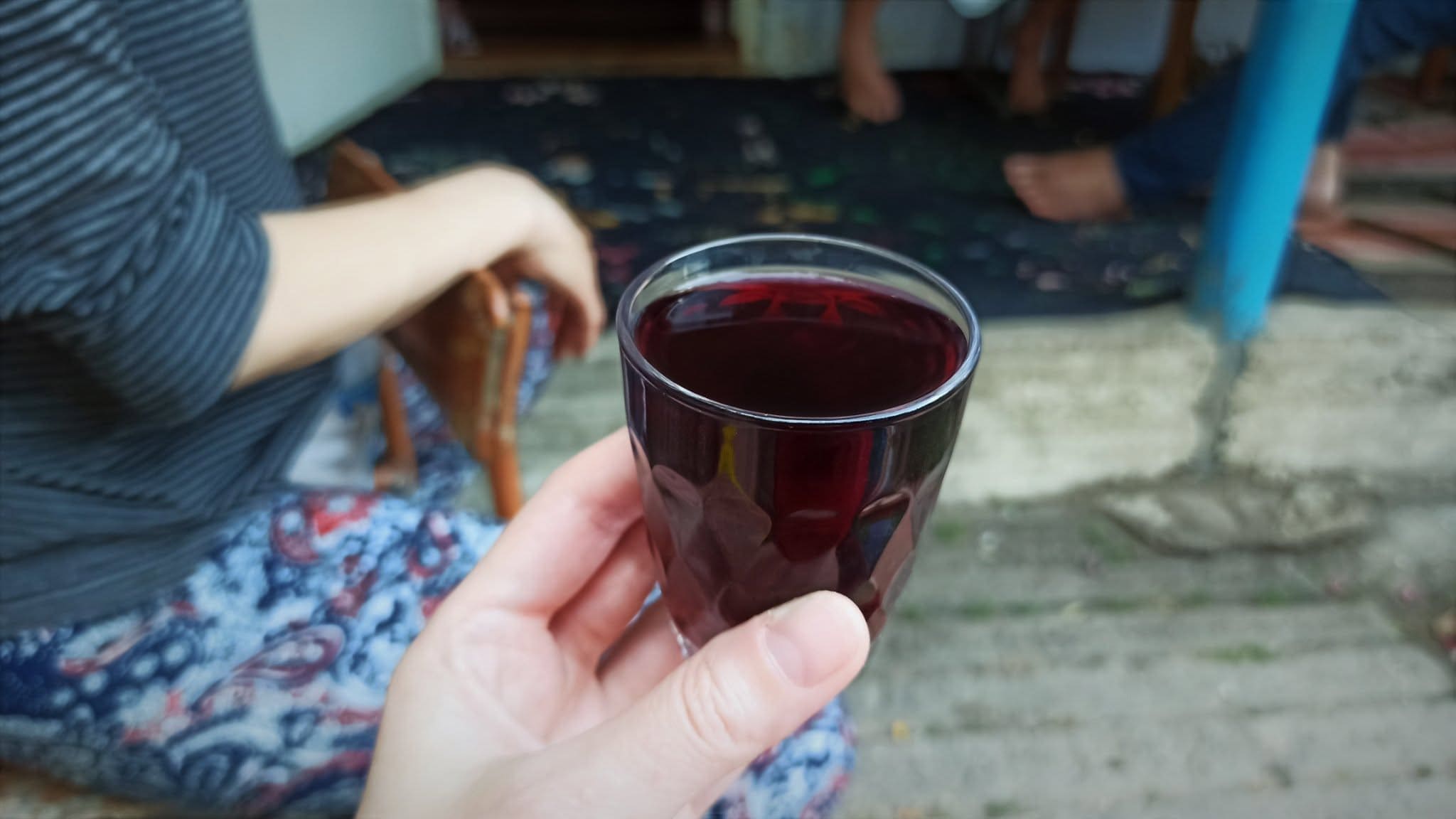
Mobility grant from Asociaţia Tinerilor Artişti Oberliht for research in Moldova on folk dance and music, and the historical connections between lautari and klezmorim traditions. Video notes, as a teaser of documentary, tell about noroc, this word means happiness.
2023
EU4Culture mobility grant (Goethe-Institut) for participation in Yiddish Summer Weimar, including the organisation and documentation of a workshop on Yiddish Gesture Dance led by Walter Zev Feldman.
2023
Grant of EU4Culture (Goethe-Institut) for the film-scoring project Litvak Dialogue for a silent movie, creating a space where Belarusian folk musicians were studying klezmer music and creating the soundtrack for Magic Scissors
For several months, folk musicians in Belarus studied archival recordings and notes, exploring the traditional klezmer approach to performance Yiddish melodies. Classes with a klezmer tutor were held only online. In the movie you can find melodies of Jewish origin from the Belarusian folk repertoire, as well as melodies from the repertoire of Litvak, Jews who lived in Belarus.
As we will see, this project inspired the participants to work further with this musical treasure.
Best Soundtrack, Belarusian Film Critics Award “Red Heather”, Warsaw, 2026
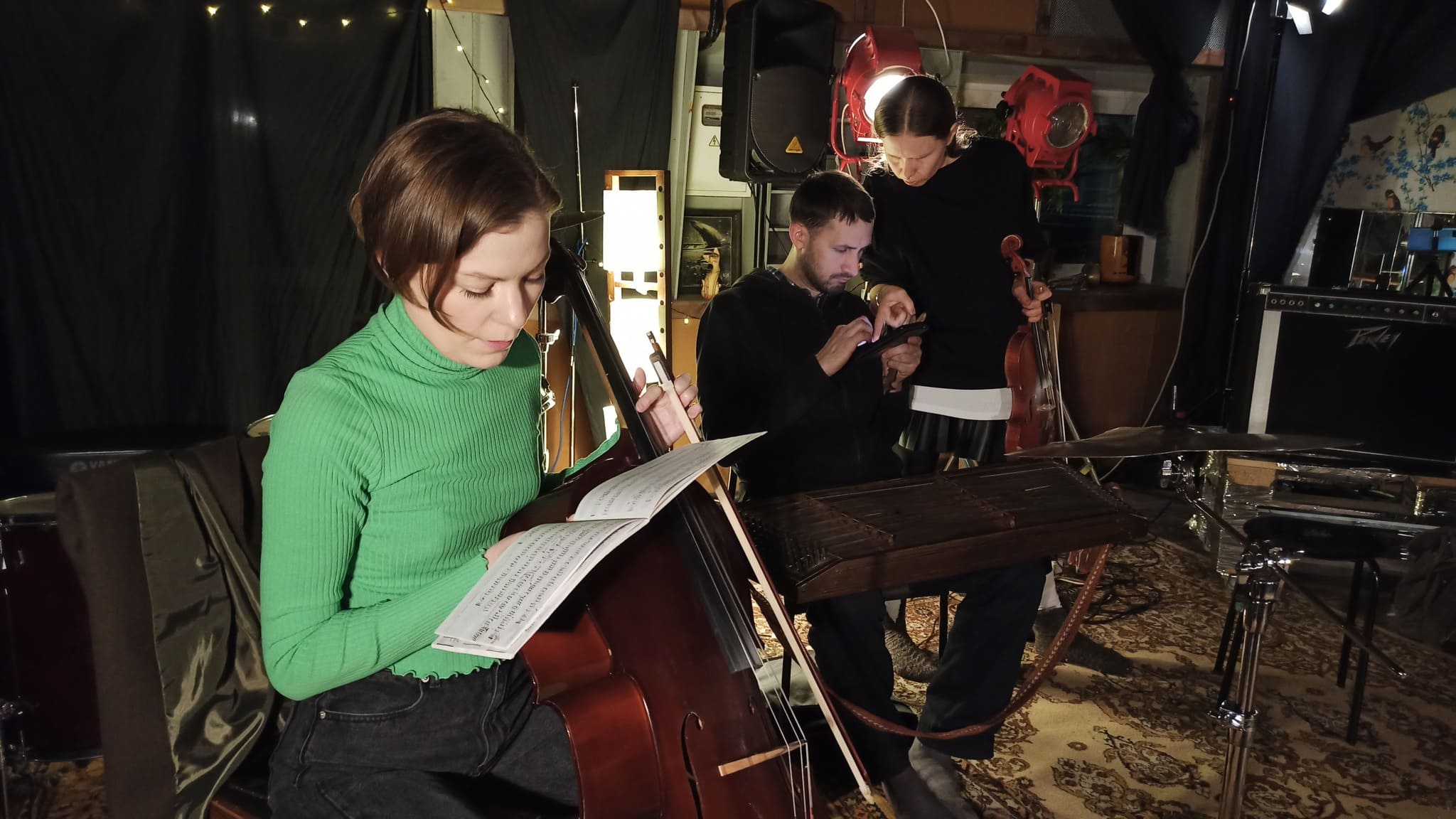
Photo credit: our archive
2024
Project Litvak Dialogue for the Post-Folklore Belarusian Community, bringing klezmer-inspired music and dance knowledge onto the dance floor through community practice.
2024
MOST+ (Goethe-Institut) grant supporting a group trip of Belarusian musicians and dancers to Yiddish Summer Weimar. Musicians who learnd klezmer in Belarus got the the most significant festival in Europe for networking and inspiration.
AS A RESULT OF THESE PROJECTS — alongside the awards received by Magic Scissors — several important new developments became possible.
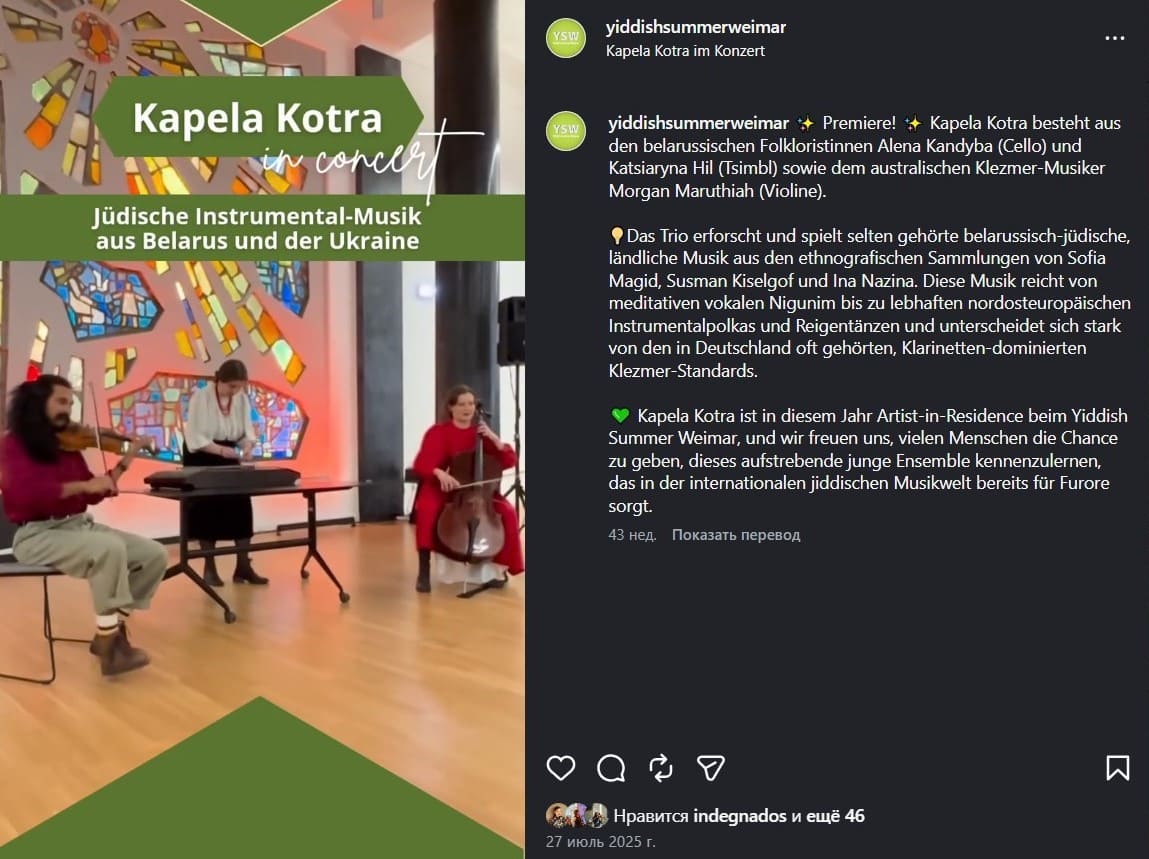
One of our participants, Alena Kandyba, was inspired for the creation of the Kapela Kotra, which brought Litvak musical material to the stage of the European Yiddish community in 2025. The regular performances of this band at various European festivals increase the visibility of the Litvak repertoire, which was one of the goals of our cross-cultural projects.
The project’s leader, Nata Holava, completed the Paideia One-Year Jewish Studies Programme(2025–2026) in Sweden and is currently working on an autoethnographic research of Yiddish dance titled Dancing Between Lines.
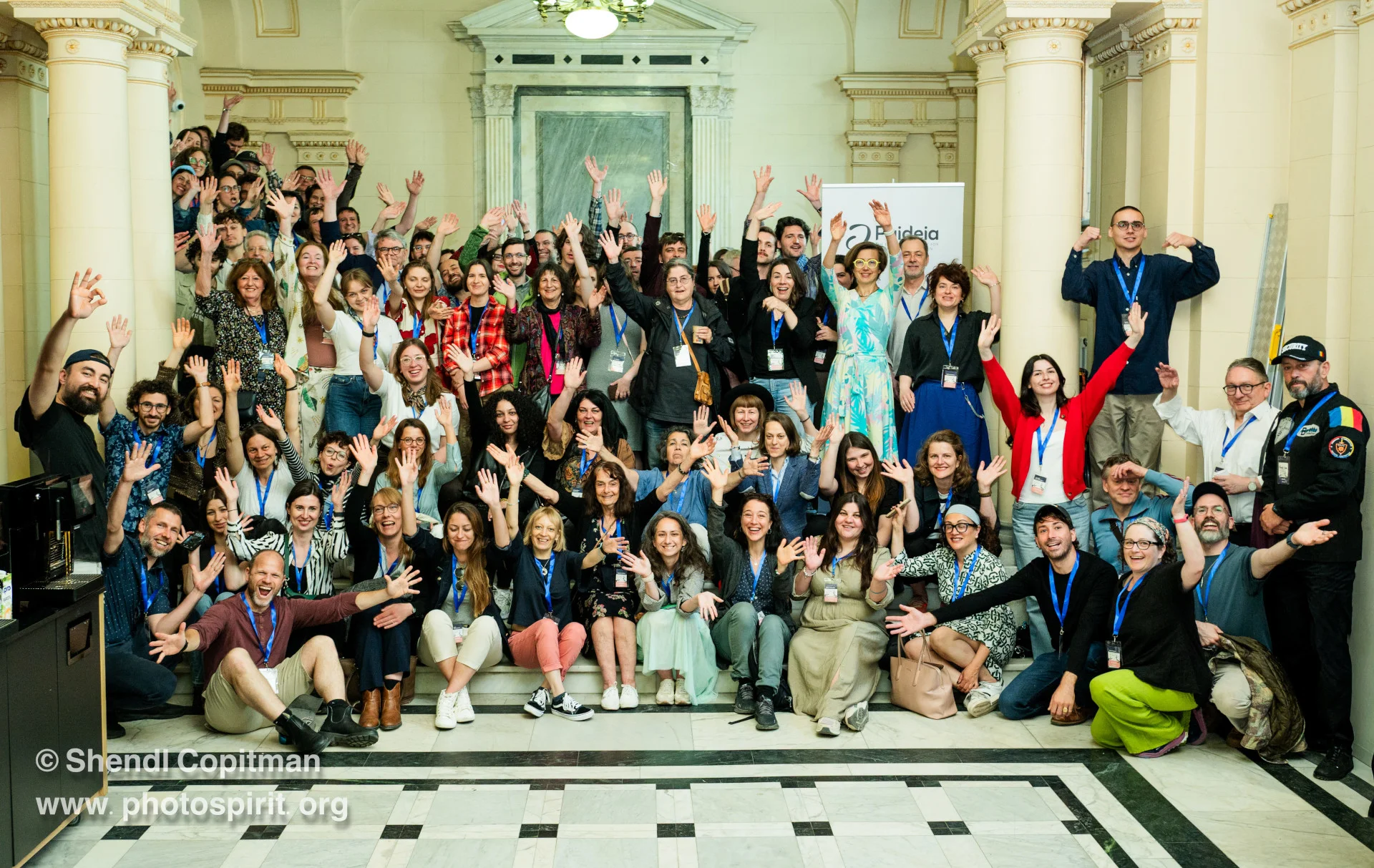
Photo credit: Shendl Copitman
«A year of study with leading teachers provided me a deeper understanding of Judaism, its roots, and its place in the contemporary world.
Where in the Torah did the most important moment in the birth of a new nation take place, and what role did a woman and her dancing play in it? (Rabbi Eiran Davies, course: Parashat HaShavua)
How can we understand a Jewish shtetl through the many languages it spoke? (Dr. Giacomo Loi, course: European Jewish Literature)
For whom did Moses Maimonides write The Guide for the Perplexed, and why did a rabbi turn to philosophy? (Prof. David Lemler, course: Medieval Jewish Philosophy)
What is the connection between the famous poet Adam Mickiewicz and Kabbalah? (Prof. Boaz Huss, course: Kabbalah and Hasidism)
Some of these questions have already found their way into the development of my next projects. I also got valuable opportunities for professional networking in Europe, while fostering a deeper sense of belonging to Jewish culture.» (c) Nata Holava
Clarinet – Valeria Conte
Dance – Nata Holava
AND THE BIGGEST NEWS FOR US RIGHT NOW:
our initiative is growing into an official cultural institution, while OUR WEBSITE IS MOVING TO A NEW HOME (different hosting and name) with future projects and collaborations soon to be announced.
A full list of our friends and collaborators will appear on the new website of our Wandering Shul.
In the meantime, we would like to express our gratitude to our partners and supporters:
Goethe-Institut (MOST, MOST+, EU4Culture)
Asociaţia Tinerilor Artişti Oberliht
Yiddish Summer Weimar
And personally:
Walter Zev Feldman
Alan Bern
Ilya Saitanov
Evgenia Khazdan
Artur Klinov
—and many others who, for now, remain behind the scenes.